
Our Learning
Early Years Foundation Stage (EYFS)
Early Years Foundation Stage (EYFS)
The Department for Education’s Early Years Foundation Stage (EYFS) sets the standards for the learning, development and care of children from birth to five years old. It is made up of 17 Early Learning Goals, which children are expected to achieve by the end of their Reception year. These goals are organised into two key areas of learning: prime and specific.
The prime areas are:
-
Communication and Language
-
Physical Development
-
Personal, Social and Emotional Development
The specific areas are:
-
Literacy
-
Mathematics
-
Understanding the World
-
Expressive Arts and Design
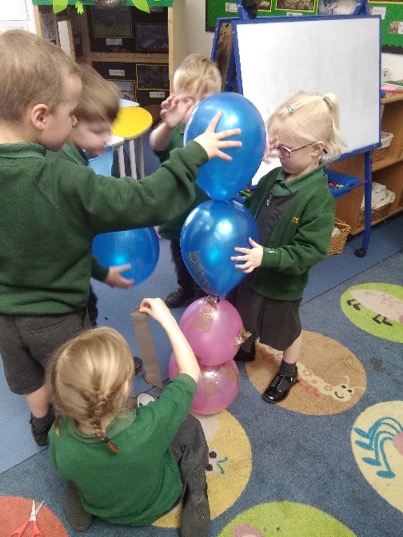
At Ickford, our EYFS (Reception) class is part of a mixed-age setting that also includes our youngest Year 1 pupils, reflecting the size and close-knit nature of our school. This environment is carefully designed to support children’s development through a balance of exploration, curiosity and play, alongside high-quality teaching.
Children take part in a wide range of engaging and challenging activities that support their early learning journey. Throughout the day, continuous provision gives access to both indoor and outdoor learning environments, allowing them to move freely and develop independence. In addition, there are opportunities for whole-class teaching, where Reception children learn alongside the younger members of Year 1, helping to build confidence and a strong sense of community.
We encourage the children to learn and play together in a calm and happy environment where imagination, co-operation and conversation are key elements of their development.
The teachers and support staff are highly skilled at working with young children and in monitoring progress using our cloud-based electronic profiling tool 2Build a Profile. This helps to ensure that parents are not only kept informed of progress but can also engage in the learning by adding information recorded in the home, to the profile.
Key Stage 1 & 2
At Ickford School, we believe in the concept of lifelong learning and the idea that both adults and children learn new things every day. We maintain that learning should be a rewarding and enjoyable experience for everyone. Through our teaching we try to equip children with the skills, knowledge and understanding necessary to be able to make informed choices and we believe that appropriate teaching and learning experiences help children to lead happy and rewarding lives.
We aim to provide a rich and varied learning environment that allows all children to develop their skills and abilities to their full potential, irrespective of socio-economic background, ethnicity, gender or religious persuasion. Through our teaching we aim to enable children to become confident, resourceful, enquiring, independent and reflective learners whilst fostering their self-esteem and helping them build positive relationships with other people.
We also believe in developing children’s self-respect and encouraging them to respect the ideas, attitudes, values and feelings of others. We expect them to show respect for all cultures and, in so doing, to promote positive attitudes towards other people. Our school and our children are valued as part of the wider community and we endeavour to enable them to grow into reliable, independent and positive citizens.
Personalised learning is at the heart of effective teaching and learning. At Ickford School we recognise the need to develop strategies that will allow all children to learn in ways that best suit them so that they may fulfil their potential. Many learning opportunities are made available to the children that take account of visual, auditory and kinaesthetic learning styles.
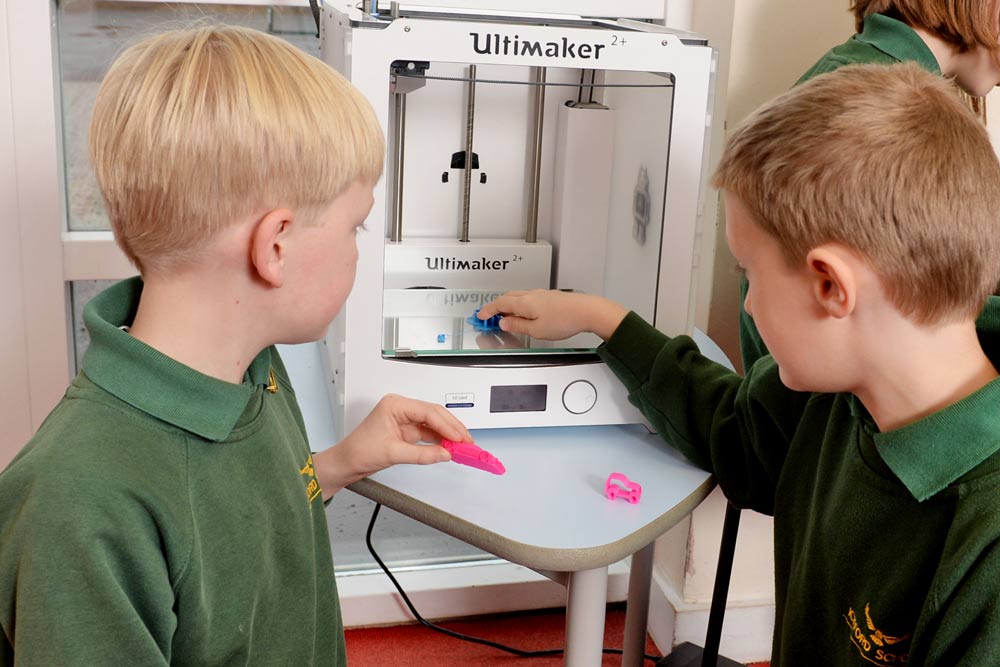
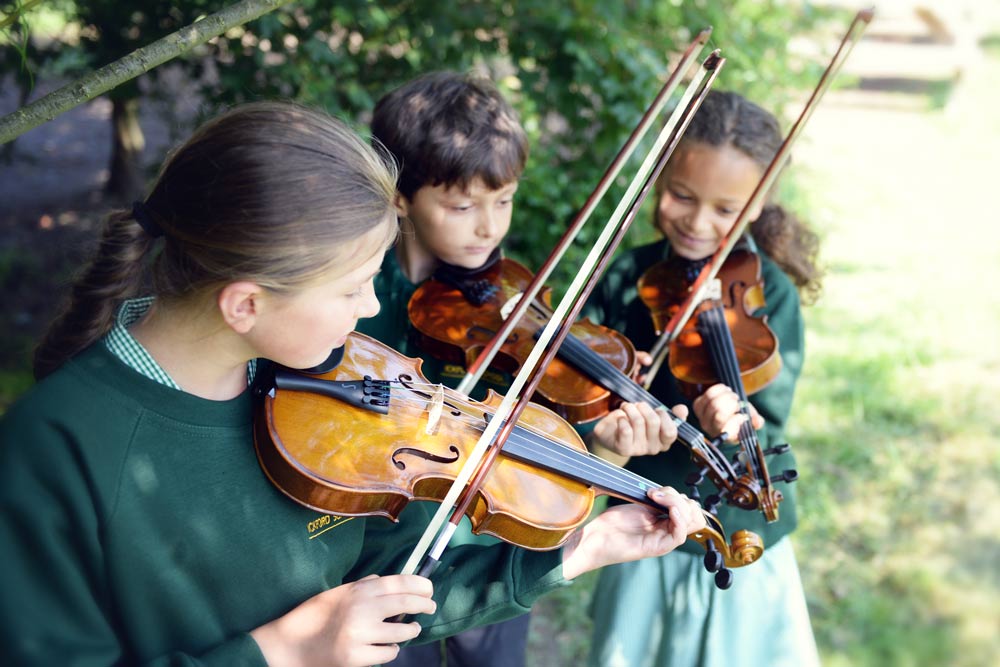
Though we use the National Curriculum as the foundation guidance for the subjects we teach, we also extend and enhance it so that we offer a rich and diverse curriculum suited to the needs of our children. This means that, amongst other things, every child is taught another language, every child receives high quality music teaching and every child has the opportunity for plenty of physical activity and to take part in sporting competitions. Subjects are also enriched through our determination to arrange visits to places of interest and our residential trips in England and France.
Monitoring and Assessment
Individual pupil progress is tracked, together with that of cohorts and specific groups throughout the school. We use a range of performance measures including teacher assessment (against NC and set targets) and test results. Strengths and areas for development are identified to inform planning and to initiate intervention as appropriate. Data is collected on a regular basis and is shared with the staff, pupils and parents.
Pupil progress is managed through the School’s information management system (Arbor). Parents are kept informed of their child’s progress each term with a printed data update and throughout the year with parent/teacher meetings and an annual school report.